
How to Read Dog Food Ingredients
Like all pet lovers, you want to put a good, well-balanced meal in your adorable pup’s bowl. But when you turn the bag around, there is a long list of dog food ingredients, unfamiliar names, and claims designed to make the recipe sound like “the perfect choice” for your fluffy pal.
But are those ingredients really as good as they sound? And how can you tell?
Learning how to read dog food ingredients can help you look past the pretty packaging and understand what is actually going into your dog’s bowl.
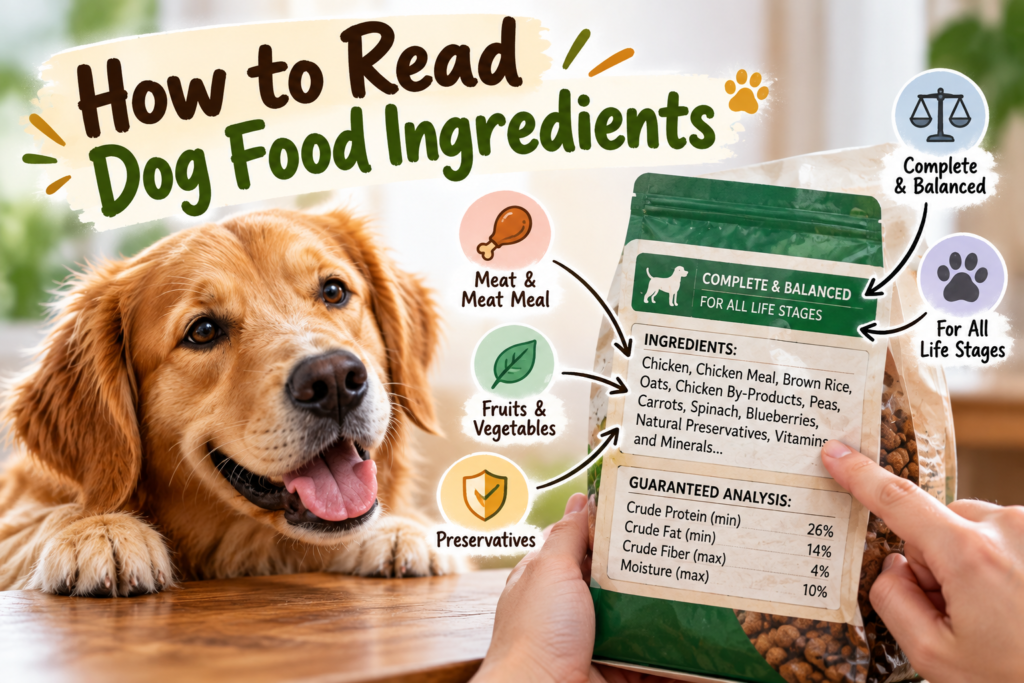
1. Look for “complete and balanced”
This should be your first check.
If the food is meant to be your dog’s main diet, look for a nutritional adequacy statement saying it is complete and balanced for your dog’s life stage. FDA guidance explains that this claim must be supported by meeting an AAFCO nutrient profile or by passing an appropriate feeding trial.
That matters far more than a pretty picture of vegetables slammed on the front of the packaging.
2. The first ingredient is not the whole story
When you see chicken as the first ingredient, it is easy to think, “Great, this must be a good food for my pup.” But one little detail can change how you read that label.
See, fresh chicken contains a lot of water. And because ingredients are listed by weight, that water counts too. Chicken meal has already had most of that water removed, so it is much more concentrated.
Why does that matter to you?
Because the first ingredient alone does not tell you how much useful chicken protein your adorable pup is actually getting. A food can put fresh chicken first and still contain less chicken protein than you might expect.
So before you decide a food is better simply because “chicken” is at the top, look at the whole ingredient list. Your pup deserves more than a label that sounds good.
3. Meat meal can be a good ingredient
While reading a pet food label, you might be tempted to skip a food simply because you see the word “meal.”
But “meal” does not mean the ingredient is poor quality. Meat meal is made from animal tissue, with much of the water and fat removed. This makes it more concentrated and useful in dry dog food, especially as a protein source.
It may sound less appealing than “fresh chicken,” but that does not make it less nutritious.
4. By-products are not rubbish
This is one of the biggest misunderstandings in dog food.
By-products can include nutritious organs such as liver, kidneys and lungs. These tissues can provide valuable protein, vitamins and minerals. They are not simply the unwanted scraps many people imagine.
So there is no need to put the dog food bag back in its aisle just because it says animal by-products on its label
5. Watch the ingredients added for your eyes
Dog food packaging knows how to catch our attention.
You may see blueberries, spinach, pumpkin, or carrots proudly displayed on the bag. They can provide some nutrients, but when they appear near the end of a long ingredient list, there may be very little of them.
The same goes for “preservative-free” claims. As evil as marketers portray them, preservatives aren’t boogeymen coming to get our canines. They are essential ingredients that can help stop fats from going bad. Plus, they keep the food fresh and nutritionally stable for longer.
6. Remember what your dog actually needs
Your dog does not need the most beautiful ingredient list.
They need the right nutrients, in the right amounts, delivered in a safe, complete diet. That is why the guaranteed analysis, life-stage statement and nutritional adequacy statement deserve your attention alongside the ingredient list.
The goal is simple: choose food that is genuinely good for the dog waiting beside you, not food that merely looks good on a label.




1 comment
Furrbe Design
https://www.youtube.com/@pawarty