
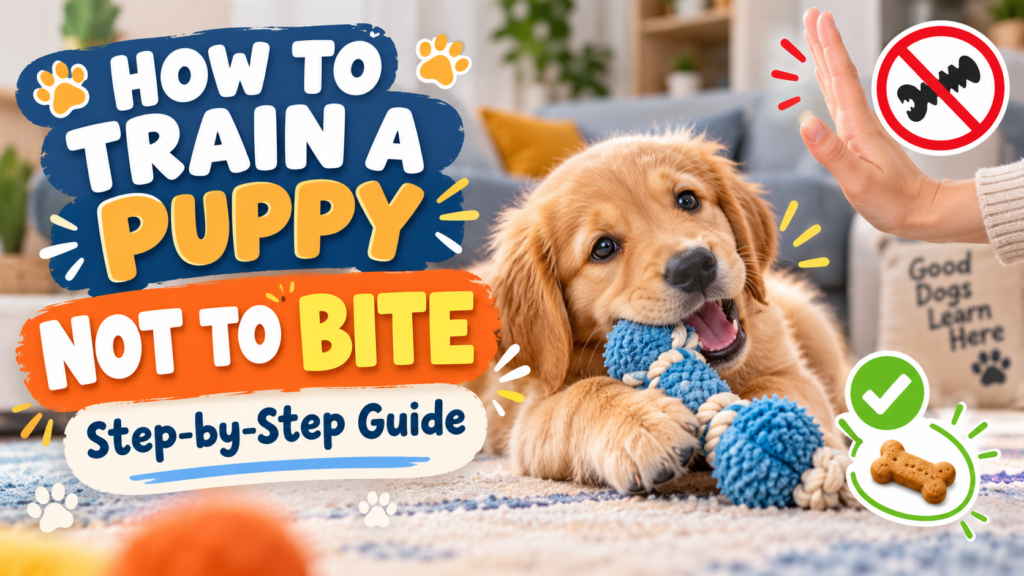
How to Train a Puppy Not to Bite: Step-by-Step Guide
Puppies use their mouths to figure out the world. Biting, chewing and nipping are normal at this age, and most of it is harmless. But if nobody steps in, it can turn into a real problem. Knowing how to train a puppy not to bite helps your dog build good habits. It also makes life safer and calmer for both of you.
The reasons are usually simple: teething, excitement, play, or never having learned bite inhibition. With patience, steady practice and positive reinforcement, most puppies get better at controlling it as they grow.
Why Do Puppies Bite?
Start with the why. Once you know it, the fix gets a lot easier.
Teething and Mouth Exploration
A young puppy’s teeth hurt as they come in. Chewing eases the sore gums, so give your puppy proper chew toys and let it bite those instead.
Play and Social Learning
With littermates, puppies play by biting and wrestling. That’s where they pick up bite inhibition, which just means learning how hard is too hard.
Attention-Seeking Behavior
Sometimes a puppy bites because it gets a reaction. Even shouting counts. To the puppy, it’s still attention, so it keeps going.
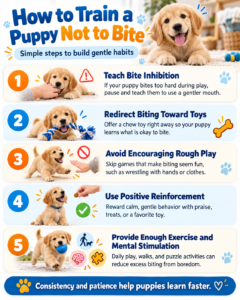
How to Train a Puppy Not to Bite
1. Teach Bite Inhibition
The best place to start is showing your puppy that a hard bite ends the fun.
When the bite is too strong:
- Make a calm “ouch” sound
- Stop playing right away
- Ignore the puppy for a little while
The puppy learns that biting means losing your attention. According to the American Kennel Club (AKC), giving the right feedback and redirecting the puppy can help it learn acceptable play habits. The American Kennel Club also has guidance on handling puppy biting and mouthing.
2. Redirect Biting Toward Toys
Don’t let your puppy chew on hands or clothes. Give it something better to bite.
Each time it starts biting:
- Hand over a chew toy
- Get it playing with the toy
- Praise calm chewing
Before long, the puppy understands what is okay to bite.
3. Avoid Encouraging Rough Play
Lots of owners teach biting by accident. Games that involve grabbing hands, or letting a puppy chew hard, send the wrong message.
Skip these:
- Wrestling with your hands
- Waving fingers near the puppy’s mouth
- Letting it chase and bite your clothes
Toys, balls and simple structured games work much better.
4. Use Positive Reinforcement
Puppies catch on quick. They notice which actions get them a treat or some attention, so reward the good stuff right when it happens.
Things worth rewarding:
- Sitting calmly
- Playing gently
- Chewing toys, not people
- Following a command
Studies on animal behavior say reward-based training helps dogs listen better and cuts down the habits you don’t want. The Journal of Veterinary Behavior published one that compared different training methods and what they do to a dog’s behavior.
5. Provide Enough Exercise and Mental Stimulation
A bored puppy with extra energy will bite more. Regular exercise and some brain work can bring that down.
Good ways to burn energy:
- Short walks
- Puzzle toys
- Training sessions
- Interactive games
What Not to Do When Training a Puppy
Don’t hit your puppy. Don’t yell at it, and don’t hold its mouth shut. Do that and the puppy gets scared, and the trust between you two can take a hit. What works is simple: stay consistent, turn the biting toward something else, and reward good behavior.
FAQs
At what age do puppies stop biting?
Most puppies bite a lot less by 4 to 6 months old. By then they’ve finished teething and have better control.
Should I bite my puppy back to stop biting?
No. It can confuse or frighten your puppy, and trust may suffer. Redirecting the biting and rewarding good behavior does a better job.
Why does my puppy bite me but not others?
Most times a puppy bites the people who play with it the most, or the ones who react loudly. Keep training steady and it learns how to behave around everybody.
References
- American Kennel Club (AKC). How to Stop Puppy Biting and Teach Bite Inhibition.
https://www.akc.org/expert-advice/training/stop-puppy-biting/ - Vieira de Castro, A. C., et al. (2019). Does training method matter? Evidence for the effectiveness of reward-based dog training. Journal of Veterinary Behavior.
https://www.sciencedirect.com/journal/journal-of-veterinary-behavior - Dunbar, I. (2004). After You Get Your Puppy: A Positive Approach to Raising a Happy, Healthy, and Well-Behaved Dog.
https://www.dogstardaily.com/



1 comment
Furrbe Design
https://www.youtube.com/@furrbe