
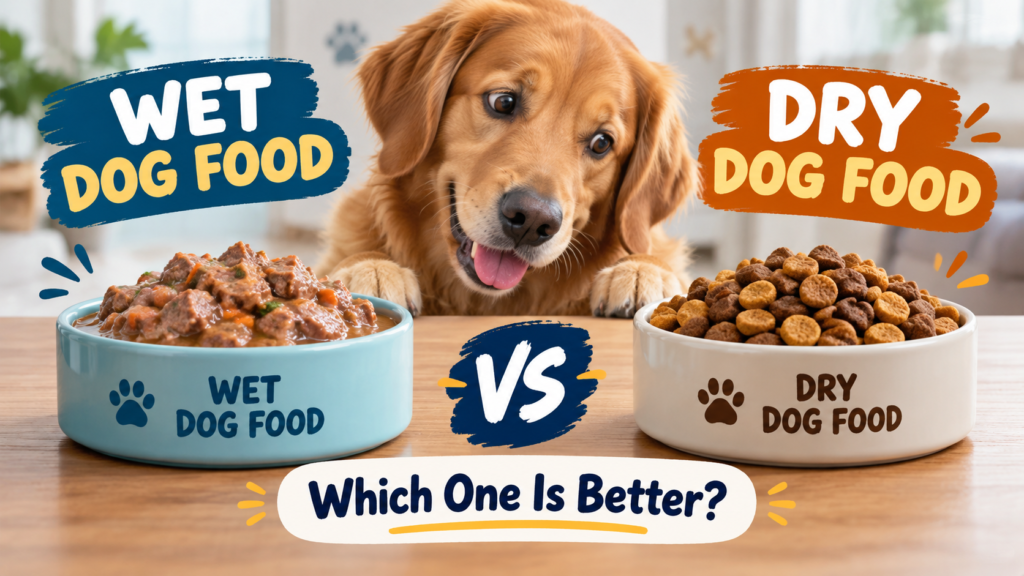
Wet Dog Food vs Dry Dog Food: Which One Is Better?
Choosing dog food can feel a little confusing. Walk into a store and there are so many bags, cans, flavors, and types that it is easy to wonder what your dog actually needs. The wet dog food vs dry dog food debate mostly comes down to what works for your dog.
Wet food has more water and a softer texture. Dry food is easy to store, measure, and serve. Neither one is automatically right for every dog. Age, health, activity, eating habits, and overall nutrition all matter.
Wet Dog Food and Dry Dog Food
What Is Wet Dog Food?
Wet dog food is normally canned or pouched. It contains much more water than dry kibble, so the food feels softer and usually has a stronger smell. Some dogs really like that. For dogs that are fussy about food, the smell and soft texture can make mealtime a little easier.
The extra moisture can also be useful for dogs that do not drink much water. Some dogs simply enjoy the taste more, too.
Research in canine nutrition has found that food format and moisture levels can affect digestion and stool characteristics. One study in the Journal of Nutrition compared different diet formats and looked at digestion and fecal quality in dogs.
What Is Dry Dog Food?
Dry dog food, or kibble, is the everyday choice in many homes. Easy to portion, compact storage, and will keep for a long time in the cupboard.
Research published in the Journal of Animal Science looked at commercial dry dog foods.
Wet Dog Food vs Dry Dog Food: Key Differences
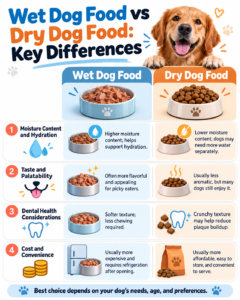
1. Moisture Content and Hydration
Wet food contains much more water, which can be helpful for dogs that do not drink enough on their own.
It may also be useful for some older dogs or dogs with certain urinary concerns. Kibble has much less moisture. Dogs eating mostly dry food should always have fresh water available.
2. Taste and Palatability
Some dogs simply prefer wet food. The smell is stronger, and the softer texture can be easier to eat. That can come in handy with picky eaters, older dogs, or pets recovering from illness.
Other dogs have no problem with kibble. If your dog happily eats dry food and gets the nutrients it needs, there may be no reason to change it just for the sake of variety.
3. Dental Health Considerations
Chewing dry kibble may help with some plaque buildup compared with eating only soft food. That does not mean an ordinary kibble will keep a dog’s teeth clean, though. It is not a replacement for brushing or professional dental care.
Wet food does not offer the same chewing action because it is soft.
4. Cost and Convenience
Dry food is usually cheaper and easier to keep at home. Wet food often costs more per serving. Once a can or pouch is opened, it also needs more careful storage.
Dry food can also be handy when you need to measure meals during the day. Wet food takes a little more planning once it has been opened.
Which One Is Better for Your Dog?
There is no single answer to the wet dog food vs dry dog food debate. In most instances, both can be used with the food being complete, balanced and appropriate for the dog’s daily needs over time.
Wet food may make sense for:
- Dogs that need more moisture in their diet
- Older dogs that have trouble chewing
- Picky eaters
Dry food may suit:
- Owners who wish for an easy feeding and storage experience.
- Dogs that are trained to eat their meals in a controlled manner.
- Homes with several pets
Some owners utilize both. Mixing wet and dry food can add variety, as long as the dog’s overall calories and nutrients stay balanced.
FAQs
Which is the healthiest, wet or dry dog food?
Not always. One type is not automatically healthier than the other. Look at the ingredients and nutritional balance, then think about what suits your own dog.
Can dogs eat both wet and dry food together?
Yes. Many dogs can eat both. Just make sure the combined portions provide the right amount of calories and nutrients.
Does dry dog food clean a dog’s teeth?
It may offer some chewing action, but regular kibble should not be treated as dental care. Brushing and proper veterinary dental care are still important.
References
- Hendriks, W. H., Thomas, D. G., Bosch, G., & Fahey, G. C. (2013). Comparison of ileal and total tract nutrient digestibility of dry dog foods. Journal of Animal Science.
https://pubmed.ncbi.nlm.nih.gov/23881684/ - Digestibility and Effects on Fecal Quality of Mixed Diets with Various Hydrocolloid and Water Contents in Three Breeds of Dogs. The Journal of Nutrition.
https://jn.nutrition.org/article/S0022-3166%2822%2915185-0/fulltext - Shmalberg, J. et al. (2021). Apparent total tract nutrient digestibility and metabolizable energy estimation in commercial fresh and extruded dry kibble dog foods. Translational Animal Science.
https://pubmed.ncbi.nlm.nih.gov/34278234/





1 comment
Furrbe Design
https://www.youtube.com/@furrbe