
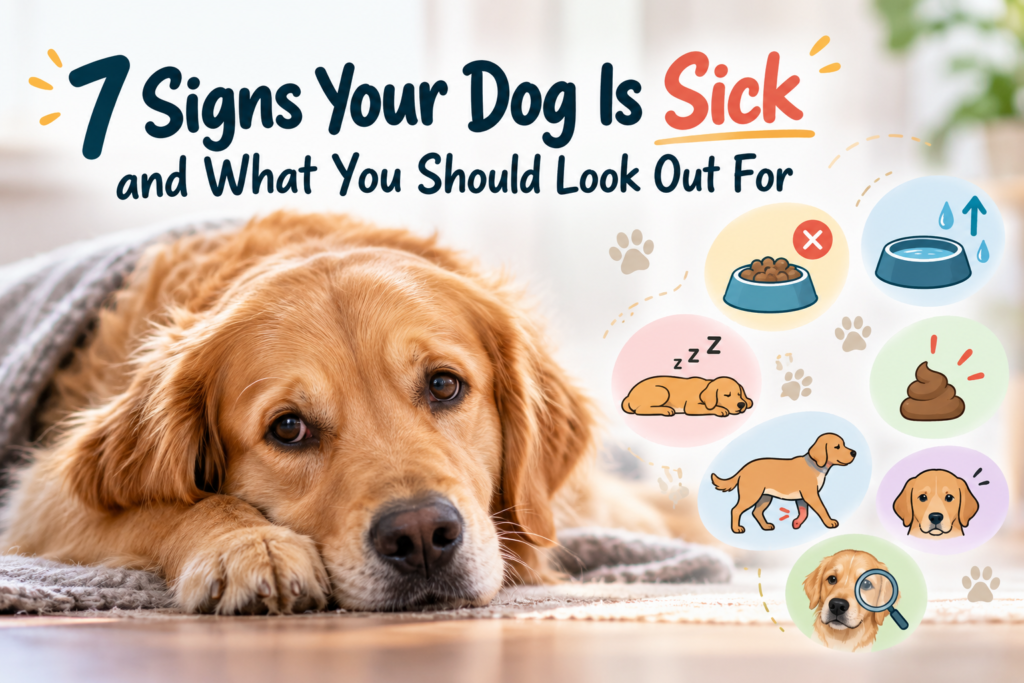
7 Signs Your Dog May Not Be Feeling Well
Not every sick dog looks sick.
Sometimes, the signs are small. Your dog may eat less, drink more water, sleep longer, or suddenly lose interest in their usual walk. Changes in bathroom habits, movement, behaviour, or appearance can also be signs your dog is sick.
The tricky part is that dogs cannot tell us what hurts. They may carry on as normal even when they are not feeling their best. So you are often left looking for small changes from their normal.
Knowing the signs your dog is sick can help you catch those changes early.
7 changes worth noticing
Every dog has their own little habits. A change doesn’t always mean something is seriously wrong, but it is worth noticing when your pup suddenly behaves differently.
1. They lose interest in food
A dog who normally rushes to their bowl but suddenly leaves food behind is showing you a change. A reduced appetite can happen for many reasons, including illness, pain, or digestive problems.
2. They drink much more than usual
Keep an eye on the water bowl. If your pup suddenly starts drinking a lot more and needing to urinate more often, do not ignore the change. It can sometimes point to an underlying health problem.
3. They are much less active
Does your playful pup suddenly spend most of the day sleeping? A noticeable drop in energy, reluctance to walk, or loss of interest in normal activities can signal that something is wrong.
4. Their bathroom habits change
You may notice diarrhea, repeated vomiting, constipation, accidents in the house, or changes in how often your dog urinates. These changes can have many causes, but they are worth discussing with your vet, especially when they continue.
5. They have trouble moving
Dogs can be exceptionally good at hiding pain. They may still greet you, wag their tail, or try to act like everything is normal, even when something hurts. That is why a change in the way your dog moves can be easy to miss. If your furry fellow starts walking more slowly, struggles to get up, avoids stairs, or hesitates before jumping onto furniture, it may be their quiet way of telling you something is wrong. Veterinarians at VCA Animal Hospitals note that dogs instinctively hide or mask pain, and changes such as reluctance to get up, climb stairs, jump, or walk can signal pain.
6. Their personality seems different
A normally social dog may suddenly hide. A gentle pup may become irritable when touched. Behavior changes can sometimes be a dog’s way of showing that something hurts or feels wrong.
7. Something looks different
Sometimes, you notice that something looks off. Your dog may start coughing, have discharge around the eyes or nose, develop a skin problem, or have paler gums.
These small details can be easy to ignore, especially when your dog otherwise seems fine. But they are worth noticing, because changes in your dog’s normal appearance can sometimes point to an underlying health problem.
When should you call the vet?
Not every unusual day calls for an emergency visit. But if a change is sudden, severe, worsening, or comes with other symptoms, contact your vet as soon as possible. Symptoms like
- Difficulty breathing
- Seizures
- Collapse
- Heavy bleeding
- Or pale, blue, grey, or purple gums need immediate veterinary attention.
Conclusion
Your dog may never be able to tell you, “I do not feel well.”
But they can show you.
Pay attention to the little things that are different from their normal. Sometimes, that small change is the first clue your pup needs help.



1 comment
Furrbe Design
https://www.youtube.com/@furrbe