
How to Stop a Dog From Barking in the Car
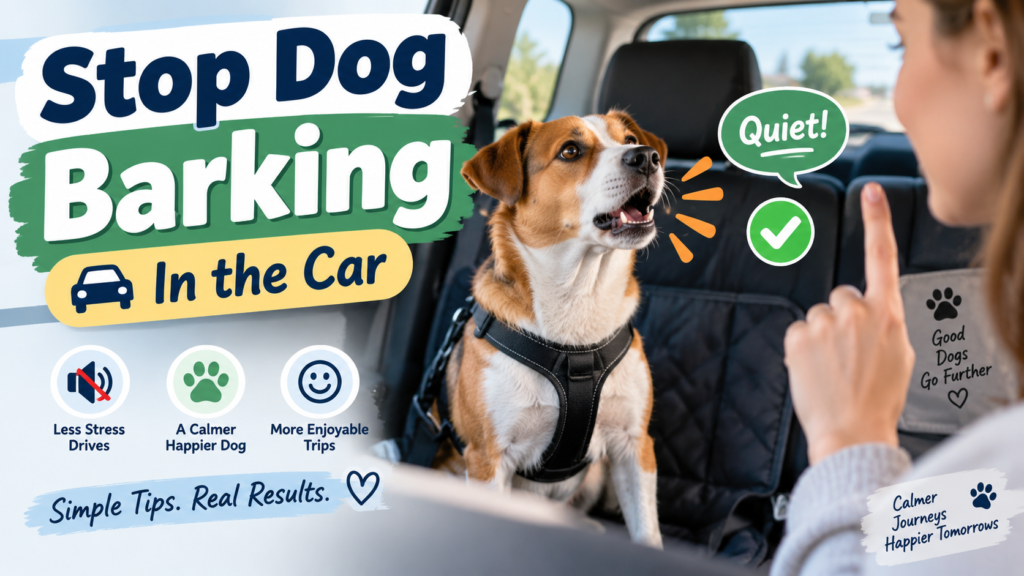
Car rides should be fun, but some dogs have a very different idea about them. The moment they get in, the barking starts. A dog may bark because of excitement, fear, anxiety, motion sickness or frustration when it sees people and animals outside. If you want to stop dog barking in the car, start by figuring out what is causing it.
Research suggests that travel problems are fairly common in dogs. One survey of more than 900 dog owners found that dogs introduced positively to car travel as puppies were less likely to develop travel-related problems later in life. Research on travel-related problems in dogs.
Stop Dog Barking in the Car: Simple Tips That Work
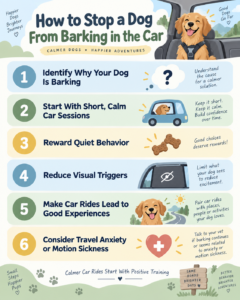
Identify Why Your Dog Is Barking
Pay attention to what happens right before the barking starts. Does it happen when the engine turns on? Or when your dog spots pedestrians, motorcycles or other dogs?
Fear can show up in other ways too. Your dog may pant, tremble, pace, drool or try to hide. Excited dogs may jump around and bark whenever something catches their attention outside.
Once you know the trigger, training becomes much easier.
Start With Short, Calm Car Sessions
Don’t start with a long drive. Let your dog sit in a parked car for a few minutes instead.
Give treats and praise when your dog stays calm. When they seem comfortable, start the engine but don’t drive yet. After that, try a short trip around the neighborhood.
This gradual process is called desensitization. Veterinary behavioral research describes desensitization and counterconditioning as common techniques for managing fears, anxieties and phobias. Study on desensitization and counterconditioning
Reward Quiet Behavior
A simple way to stop dog barking in the car is to reward the behavior you want.
If your dog sees something outside and stays quiet, give a small treat right away. With time, your dog can start connecting calm behavior with something positive.
Research involving barking dogs has also found promising results from classical counterconditioning, where positive experiences were paired with situations that normally triggered barking. Study on counterconditioning and dog barking.
Reduce Visual Triggers
For some dogs, the problem is simply everything they can see outside. People, cars, bicycles and other animals can all set them off.
A properly secured travel crate or a safer position with fewer outside distractions may help. Never let your dog move freely around the vehicle, especially near the driver.
Make Car Rides Lead to Good Experiences
If every car trip ends at the vet, your dog may start seeing the car as a warning sign. One travel study found that dogs taken only to veterinary clinics were more likely to respond negatively to car journeys.
Try taking your dog on short trips to places they actually enjoy, like a quiet walking spot or a friend’s house. This can help them see that getting in the car does not always lead to a stressful visit.
Consider Travel Anxiety or Motion Sickness
Sometimes, the barking is part of a bigger travel-anxiety issue. A recent 2026 study found behavioral and physiological signs of travel-induced anxiety in dogs during road travel. Research on travel-induced anxiety in dogs.
If your dog also drools a lot, vomits, shakes or seems really distressed, it’s best to talk with your veterinarian. Don’t give your dog medication or supplements on your own.
Final Thoughts
Learning how to stop dog barking in the car takes patience. Find the trigger, start slowly, reward quiet behavior and cut down on distractions.
And don’t yell at your dog for barking, especially if fear is behind it. Calm, reward-based training and gradual exposure can help many dogs feel safer and more relaxed during car rides.
References






1 comment
Furrbe Design
https://www.youtube.com/@furrbe